
[ G.X. de Ruiter ]


Platform:
PC / PS5 / Xbox Series X/S
Engine:
CoreX, custom in-house C++ engine
Language:
C++
Tools used:
CoreX editor (custom engine), Visual Studio Code, Git & Fork, Stash, Teamcity, MS Teams, JIRA, Confluence
Duration:
Sept 2025 - Present
Team size:
300+
Current status:
-
Game revealed at Gamescom 2025
Roles:
-
Senior Technical Game Designer on World of Tanks: HEAT
-
Technical Design of playable Vehicles and Heroes
-
Design and scripting of player abilities/skills
-
Progression design and implementation
-
Creating Live Service seasonal content drops
World of Tanks: HEAT game description:
In an alternate timeline shaped by rapid scientific progress and global cooperation, humanity’s technological marvels – once symbols of hope – have become strategic flashpoints in an escalating worldwide conflict.
Elite Agents answer the call.
Equipped with high-tech tanks and unique combat abilities, they fight a new kind of war – one not defined by borders, but by precision, firepower, and tactical dominance.
Welcome to World of Tanks: HEAT, a free-to-play PvP vehicle shooter packed with explosive combat, and non-stop action.

Heroes, tanks, and abilities
As a technical game designer on the heroes team, I was responsible for the technical design of various heroes, tanks, and their abilities/skills, for both release day and several seasons of Live Ops content drops.
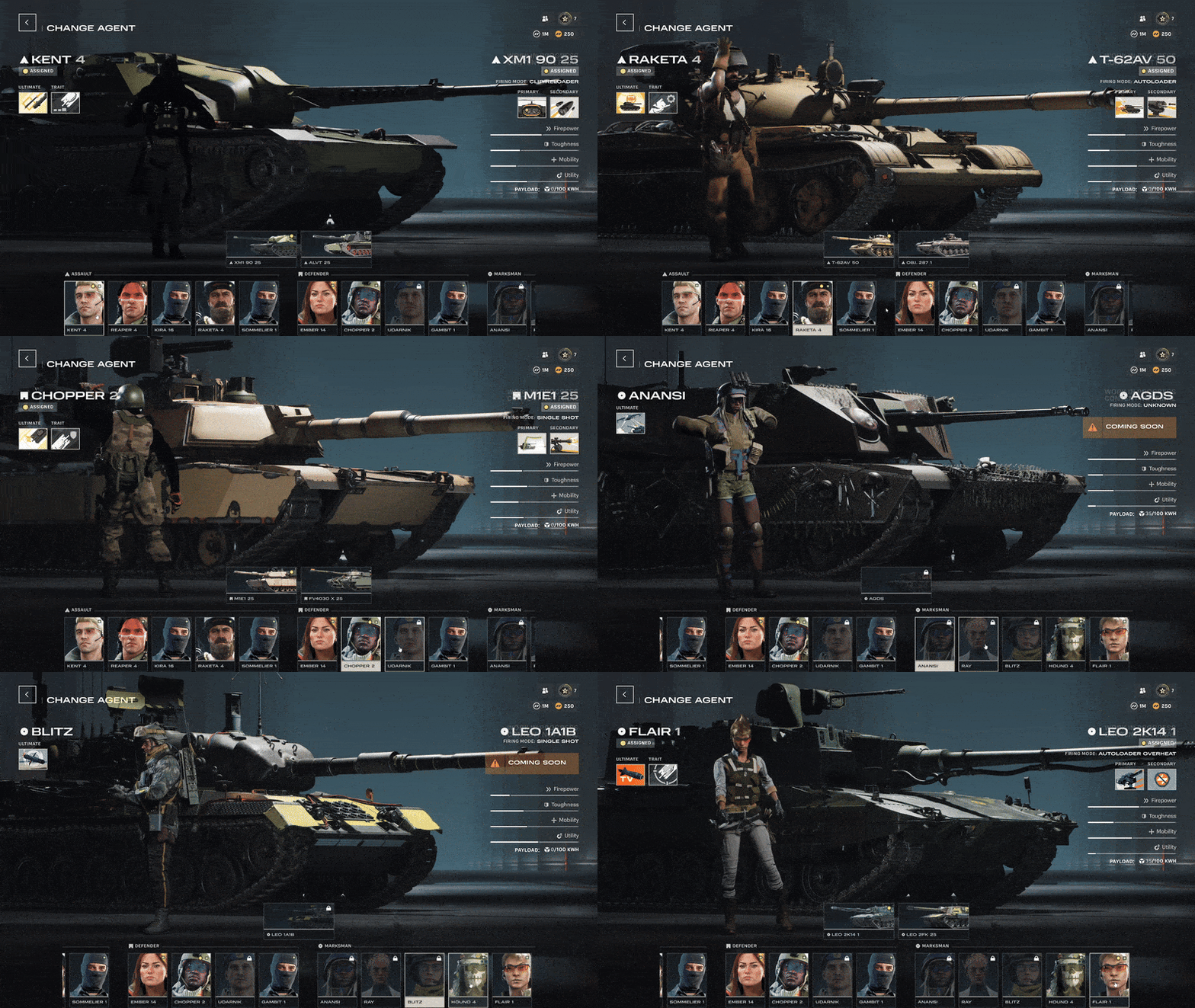
Image: Hero Select Screen
Prefabs & Components
Our engine featured an Entity-Component System (ECS) based approach, meaning nearly all gameplay logic is created by assembling and setting up prefabs with lots of components on them that add or tweak bits of code.
A lot of my work involved setting up or tweaking those (nested) prefabs and their components. Examples of prefabs could be:
-
A tank
-
The tank's turret (or any other part of the tank)
-
An individual missile shot by the turret
-
Gameplay effects spawned by the missile when it hits
-
Customizable upgrade modules for the tank (player progression)

Image: Example Tank Prefab
Logic Scripting - Finite State Machines (FSM)
All our ability logic (and other logic for the game) was scripted using a Finite State Machine (FSM) tool in our custom engine. I was responsible for creating, iterating on, and bug fixing various player abilities and progression modules using this tool.
The FSMs allowed me to create and set up nodes in a visual scripting approach, similar to Unreal Blueprint Script.
On each node, we could define actions to take (gameplay logic to run), and conditional transitions to other nodes.

Image: Finite State Machine (FSM) example
Data - .Spec files
Other work involved setup of our custom .spec files, data-only files which were meant to setup mostly logistical data. We set up various project-wide as well as hero or feature-specific data here, such as defining all the hangar and UI descriptions, everything related to the upgradeable modules of a vehicle, or monetization data.


I was fully responsible for the technical design of the American M60A3E2 tank, released along with the new Gambit hero in the game's season 2. Getting it to the perfect condition for shipping was a process of a year of playtests, feedback and iterations.
Video: HEAT Season 2 | Cinematic Trailer
Gambit Hero - M60A3E1 tank
I designed and scripted the tank's two abilities:
1. Blast Projectors: Charge up and trigger explosive charges from beneath the armor plating, dealing high AOE damage to enemies in range. High risk - high reward ability that can be manually charged up to scale both positive and negative effects. Enemy shields, tracks, and vehicles receive damage, but so does the own vehicle depending on charge time. AOE range increases with charge time. Overcharging the ability results in increasing self-damage, up to temporarily becoming immobilized (on a fully overcharged blast).
-
My design inspiration for this ability was the Magneto Ultimate from Marvel Rivals. While charging up makes the ability stronger, the player increases their own risk the longer they charge, and has to make an informed and tactical decision on when to detonate. It works extremely well with the tank's intended "dive tank" gameplay.
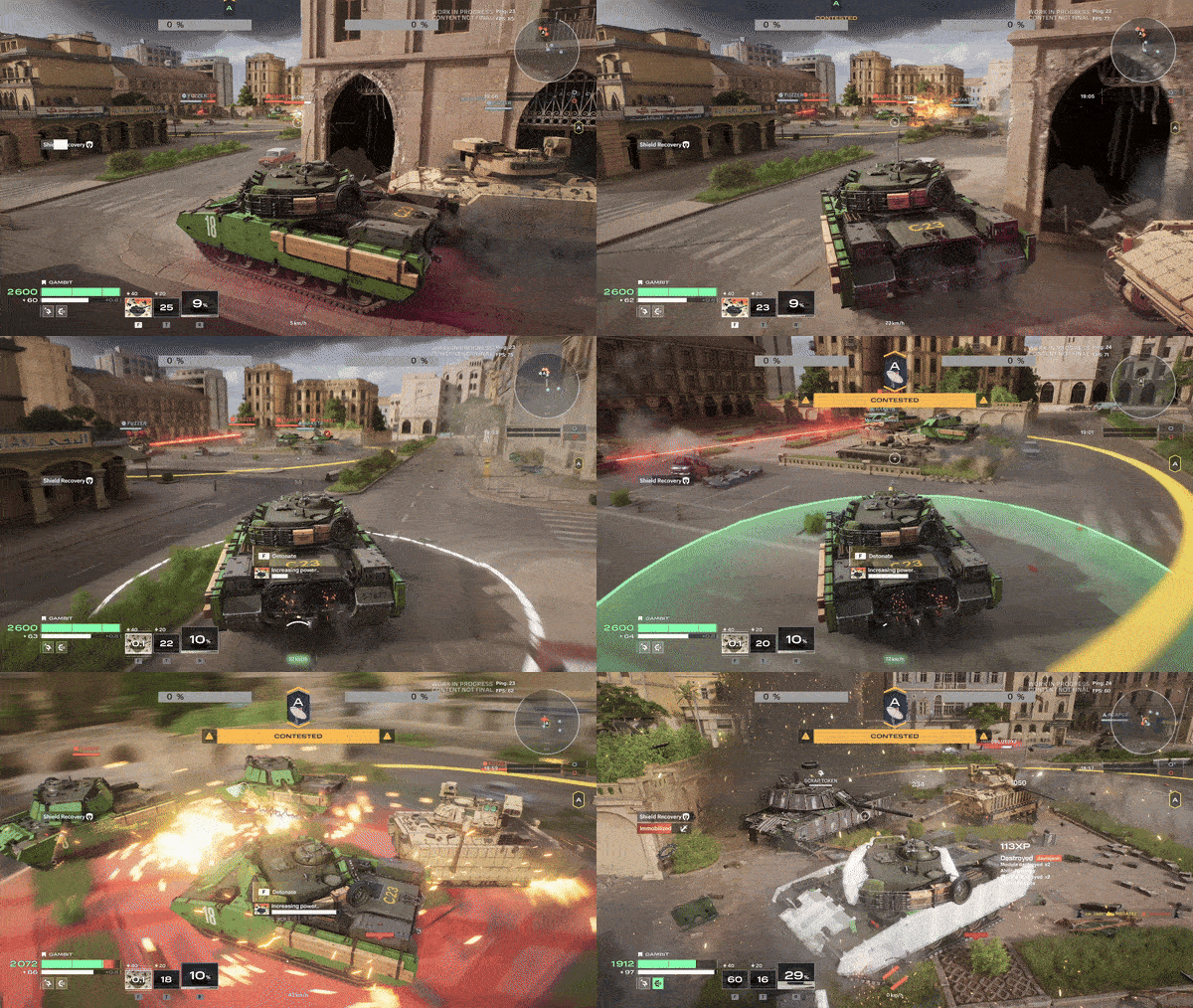
Image: Blast Projectors Ability
2. Energized plating: buff the armor plating to temporarily make shell shields indestructible, restore any broken shields, and boost track health.
-
My design intention was for this ability to be usable in several ways and support the dive tank gameplay, depending on player choice. It can be used to dive in to a group of enemies with some additional protection to both the vehicle and its tracks, preventing it from becoming immobilized. It can be used to prolong a fight after already diving, or dive back out easier when things get dire and the player needs an escape. Its short duration makes it not very usable for long duration tanking, and rather provide a brief moment of protection. My inspiration for this ability was The Hulk's Gamma Shield from Marvel Rivals.
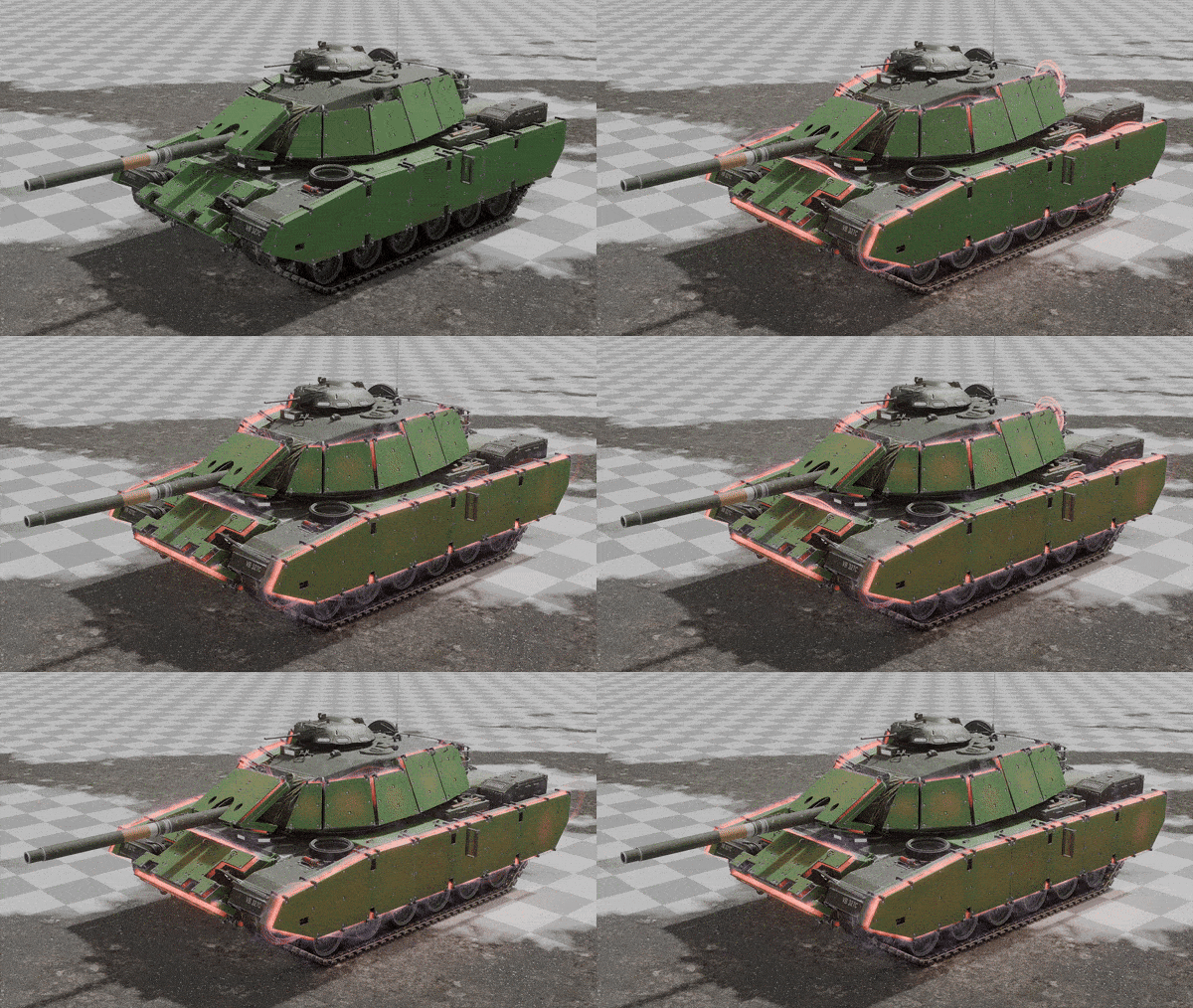
Image: Energized Plating Ability
3C Design & unique dash
-
I designed and implemented a unique dash-like sprint for this tank (first of its kind in the game), with the intention of better supporting its gameplay purpose as a dive tank
-
I balanced various mobility-related variables, such as move speed, inertia, engine force, sprint acceleration & regen, hull rotation, turret rotation
Combat design
-
I balanced the damage numbers of shots and abilities. The toughest part was implementing and balancing the various scaling variables of the blast projectors ability: self and enemy tracks, shields, and vehicle damage.
M60A3E1 - Progression
I designed and fully implemented/scripted all the 25 progression modules. These are upgrades for the tank unlockable by the player over time, as they level up the vehicle through gameplay.
A player can equip up to 6 modules at a time, 1 on each progression line (firepower, utility, defense, etc.). Players must carefully choose what type of build they want to create, and stay within a certain "power budget", so it's not always possible to simply select the 6 most powerful modules at once.
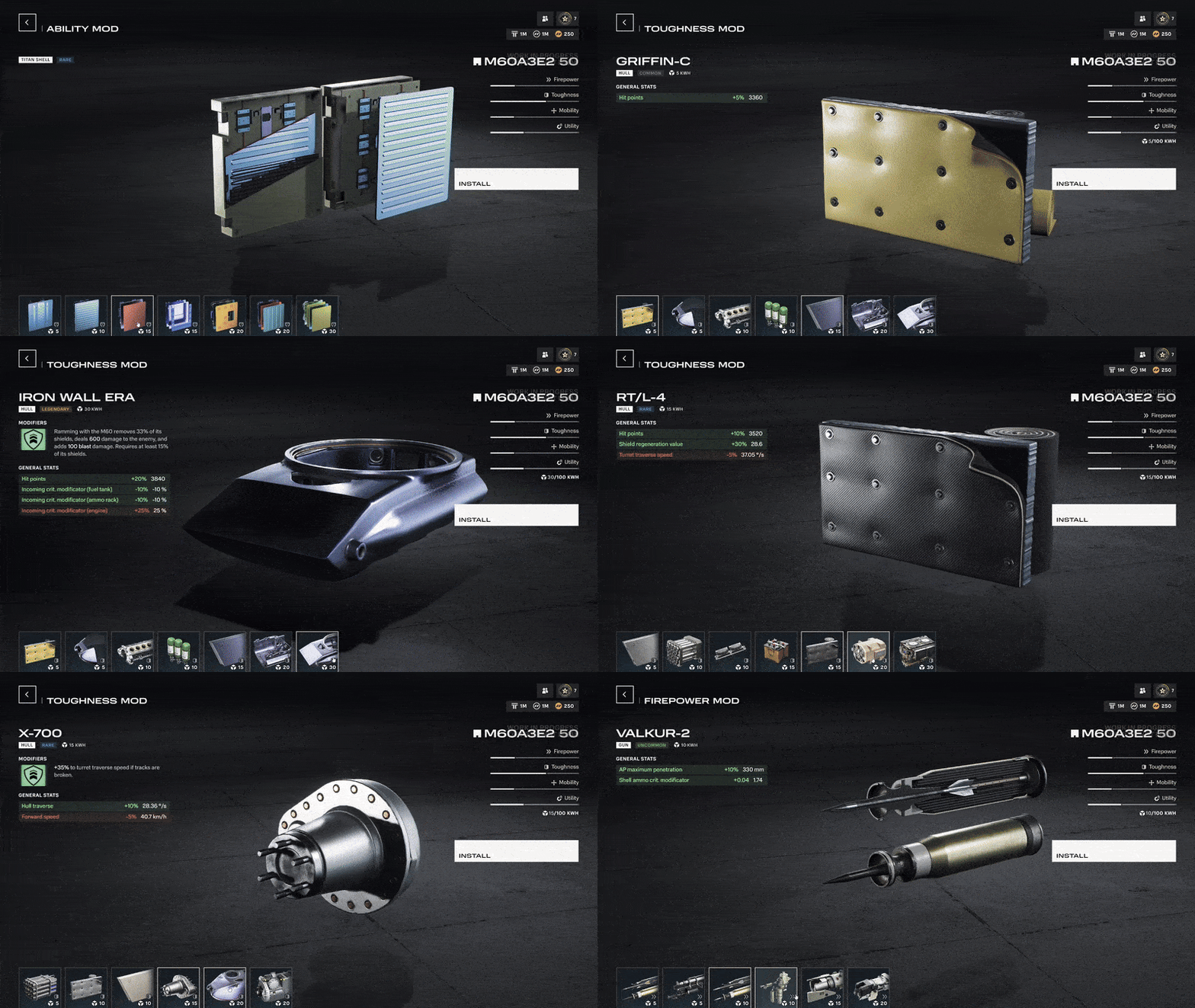
Image: M60A3 upgrade modules
I am responsible for upcoming content in Season 4. Specifics to be clarified after content is released.

TBA CONTENT (Season 5)
I am responsible for upcoming content in Season 5. Specifics to be clarified after content is released.


Damage Indicators
WOT: Heat has a quite extensive system for indicating incoming damage, what type it is, and which direction it came from. This helps the player anticipate and react to incoming damage.
I implemented the damage indicators for all of the game's abilities and world effects (e.g radiation zone, lava..), a task which required a deep dive into all heroes, tanks, and static world effect zones in the game.
The damage sources could be any of these types, resulting in different indicators:
-
Common (e.g tank main gun)
-
MachineGunFire (e.g a mounted turret)
-
ExplosiveAttack
-
InnerFireAttack (own engine being on fire)
-
GroundFireAttack
-
GroundAttack
-
AirAttack
-
RadiationAttack
Below are some examples.
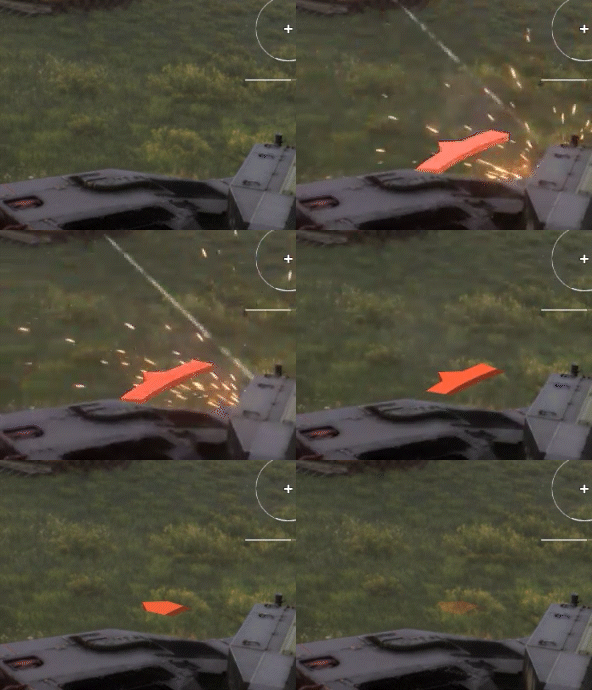

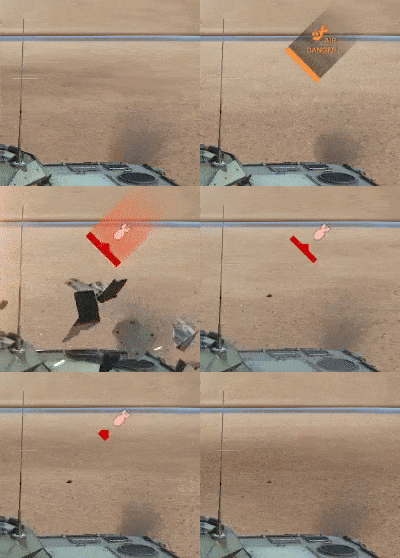
Images: Various damage indicator examples
Custom Engine Tooling
During my time at Wargaming I was responsible for expanding our custom engine called CoreX, which was newly created along with World of Tanks Heat. I worked on designing new tools as well as improving some existing ones.
Tank Validation Tool
A tool made to automate validation of the way tank prefabs are set up in the game. The user simply puts in a tank prefab they want to check, and the tool spits out a log with warnings, errors, and further informative messages to explain what needs to be fixed.
Tag Manager Tool
A tool which allows developers to create gameplay tags, manage them (move, delete, add description, categorize, etc), and easily input tags into editable fields. I was heavily inspired by Unreal Engine's tag manager in the design of this tool, but had to adjust the design to fit the requirements, UX, and tag system of our engine.

Loading image, please wait..please refresh page if this message does not go away :)


